How we used a 16-year-old scanner to bring you 30-year-old ads
Posted by Martin Burch on May 29th, 2012
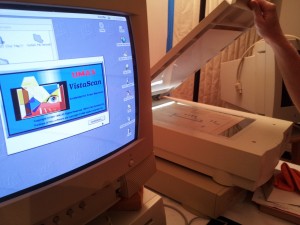
Lifting the lid on a UMAX scanner that has stood the test of time
Write this post on a 16-year-old computer? Likely to be an exercise in frustration. In comparison, scanner technology seems to have aged well. In fact, I would argue that today’s scanners, crammed into multifuction devices as an afterthought, are inferior to the top-of-the-line technology of yesteryear.
This weekend, when we wanted to digitize some magazine advertisements for computer systems from the ’70s, we brought a UMAX-brand flatbed scanner from 1996 out of the closet and pressed it into service. The SCSI interface delivered fast performance and 300-dpi scans in minutes on a Macintosh running System 9. (The resolution of the scanner can go much higher, but it wasn’t worth the wait.)
A much more modern Brother multifunction (print, copy, fax, scan) device running over USB on a OS X Macintosh proved to slow, balky and error-prone in comparison. Worse yet, it didn’t scan full 8.5×11 pages — the width it could image came up a full half-inch short.
Ah, but I’m forgetting the most important thing! The cool old ads. Here’s a preview, one well-known personality and a name brand, and one mystery microcomputer from “Dynabyte.” You can see the whole lot on our main site.
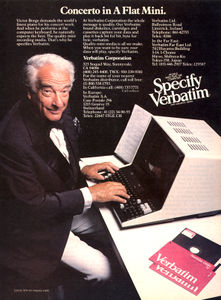
Borge for Verbatim, from BYTE magazine, November 1979
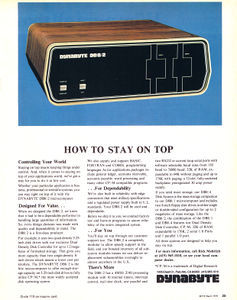
The DYNABYTE DB8/2 microcomputer, from BYTE magazine, March 1979

Lifting the lid on a UMAX scanner that has stood the test of time
Write this post on a 16-year-old computer? Likely to be an exercise in frustration. In comparison, scanner technology seems to have aged well. In fact, I would argue that today’s scanners, crammed into multifuction devices as an afterthought, are inferior to the top-of-the-line technology of yesteryear.
This weekend, when we wanted to digitize some magazine advertisements for computer systems from the ’70s, we brought a UMAX-brand flatbed scanner from 1996 out of the closet and pressed it into service. The SCSI interface delivered fast performance and 300-dpi scans in minutes on a Macintosh running System 9. (The resolution of the scanner can go much higher, but it wasn’t worth the wait.)
A much more modern Brother multifunction (print, copy, fax, scan) device running over USB on a OS X Macintosh proved to slow, balky and error-prone in comparison. Worse yet, it didn’t scan full 8.5×11 pages — the width it could image came up a full half-inch short.
Ah, but I’m forgetting the most important thing! The cool old ads. Here’s a preview, one well-known personality and a name brand, and one mystery microcomputer from “Dynabyte.” You can see the whole lot on our main site.
Borge for Verbatim, from BYTE magazine, November 1979
The DYNABYTE DB8/2 microcomputer, from BYTE magazine, March 1979